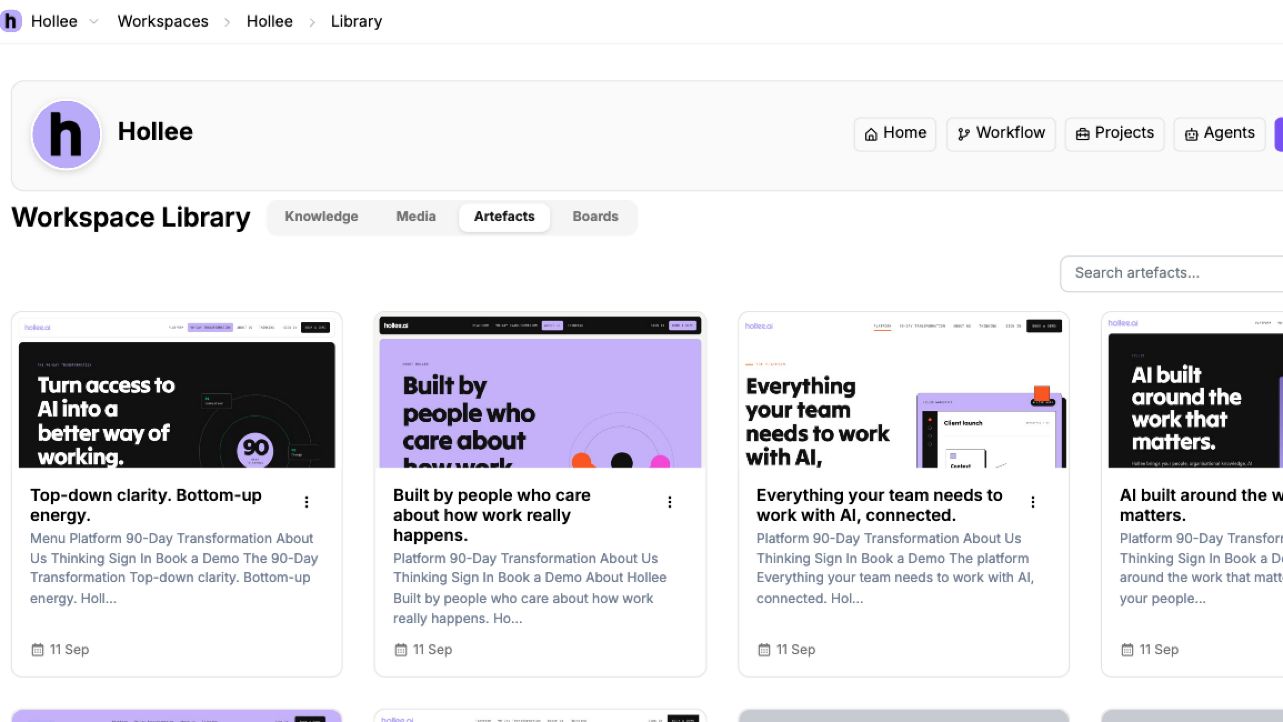
An answer in a chat is often the beginning of the work. Someone still has to turn it into the document, plan, webpage or presentation that people will use. Hollee Artefact Studio is built around that next step: making the output editable and useful beyond the conversation.
An Artefact is the created output. An Artefact Template supplies its structure. A Brand Book supplies the approved identity and language. The team's knowledge supplies the facts and examples. Keeping those jobs clear helps an output reflect the business rather than the model's default idea of a presentation.
Keep control of the finished work
The team should be able to inspect the result, change the weak section and keep the parts that already work. It needs a route for reviewing content and layout, returning to an earlier version and saving useful work for the next job.
For an agency credentials deck, start with approved case studies, the opportunity and the right presentation structure. Use AI to help assemble the argument and shape the content. Then check that the claims are supported, the order makes sense and the visual treatment fits the client conversation.
The rapid production of the elusive creds deck is useful because it gives the team more time to improve the argument. Speed alone is a poor reason to send a deck that nobody has read.
Make the review part of production
A generated draft should remain open to challenge. Does it answer the brief? Can the reader follow it? Have the images loaded? Has the formatting survived the viewing or export route? Are the figures and quotations correct? Those are production questions, whatever helped create the draft.
Save the approved version in the appropriate Library or Project. Keep working material and released work recognisable, and let the people responsible for the client relationship decide what goes out.
Artefact Studio connects AI assistance with the ordinary craft of making a useful thing: drafting, checking, editing and finishing. Explore Artefacts in the Hollee platform.