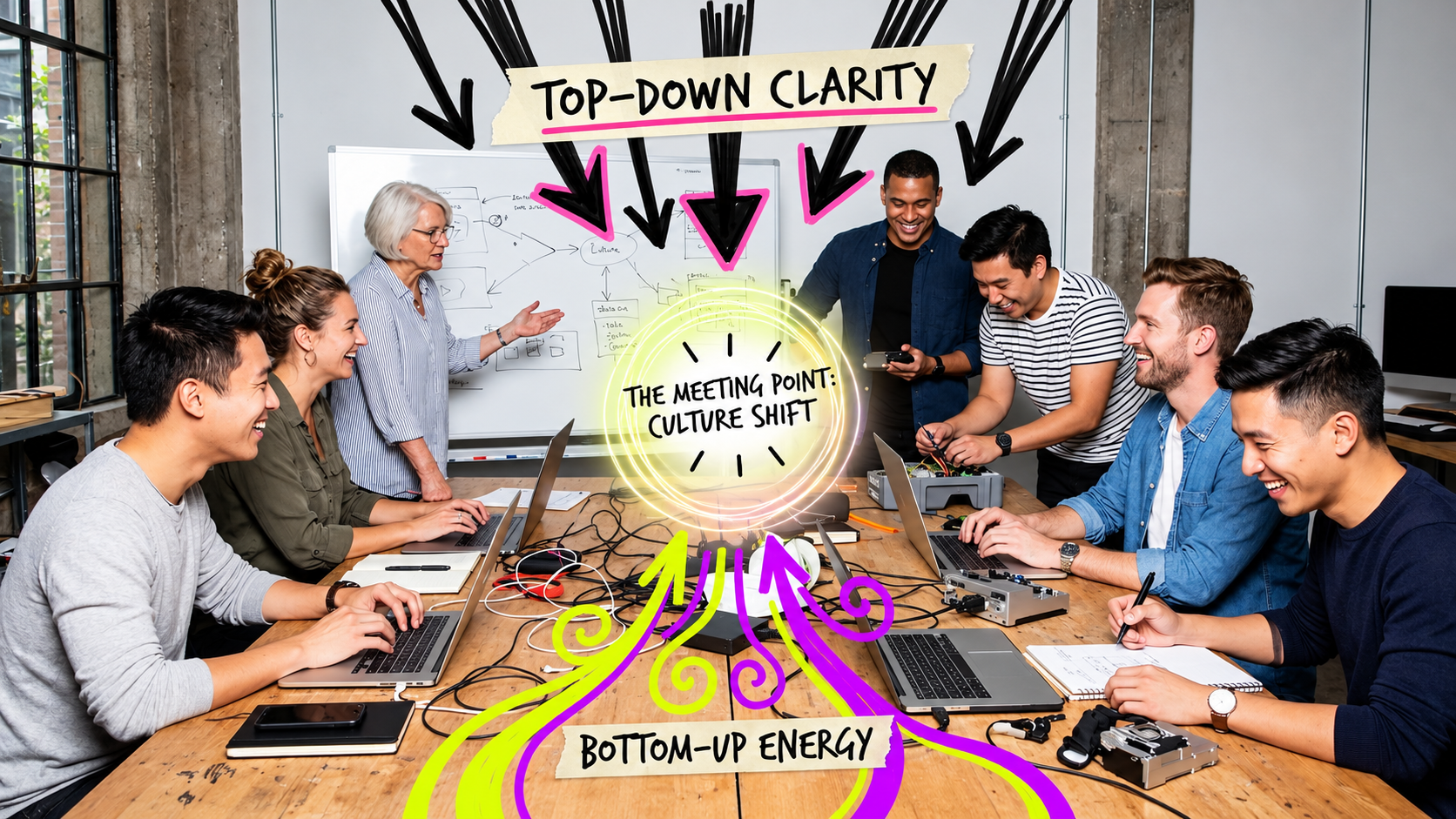
Begin AI transformation with a piece of work the business needs to perform better. For an agency, that might be winning a proposal, developing a campaign or turning a client request into a useful response. It needs to matter enough that improving it will make a difference.
Important work crosses roles, systems and decisions. The delay may sit between two teams. A brief may leave out the thing everyone needs. A senior person's judgement may arrive after most of the work has been done. Buying another tool can increase activity while those problems remain.
Find the work that matters
We call the repeated route from a trigger to a useful result a workcycle. Map what actually happens. Where does it wait? What gets returned for correction? Where do people hunt for information? Which decision is being made too late? Ask the people doing the work and look at real examples.
A proposal is a useful illustration. Generating a draft faster may help, but the bigger problem could be unclear positioning, weak case studies or several people reviewing different versions. The opportunity is easier to see when you follow the work from invitation to submitted proposal.
Agree what excellent looks like
The Vital Few are five observable characteristics of excellent work. For a proposal, a team might agree that it addresses the client's actual problem, makes a distinctive case, supports its claims, offers a credible delivery plan and makes the buying decision clear. These are characteristics of the result, rather than a list of tasks.
Then identify the hazards that prevent those characteristics. Missing client context is a hazard. Approved briefing knowledge could be a countermeasure. Late specialist challenge is a hazard. Bringing that person into the direction stage could be a countermeasure. AI may help, but the change must fit the problem.
Research from the International Labour Organization describes why task-level AI gains need skills and changes to work organisation before they become wider productivity gains. That supports the case for looking beyond the individual prompt.
Learn through real work
Hollee brings together the software, transformation consultancy and a 90-day adoption programme. We shape the platform around the chosen work, put the agency's knowledge and standards into it, and work alongside the team while it uses the system on live projects.
The three rounds give people time to understand the work, change how it runs and embed the improvement. Each attempt shows what the first map missed. The useful measure is what changed in quality, time, rework or capacity, and whether the team can keep improving it.
Read about the 90-day transformation and the Hollee software that supports it.